

The new economics of warfare: defence investment planning in the age of drones and autonomous systems


Understanding the new economics of warfare and defence investment planning
The global security environment is changing fast. Over the past few years, conflicts—especially the war in Ukraine—have revealed a fundamental shift in how wars are fought and financed. This shift is often described as the new economics of warfare, and it is forcing governments to rethink how they plan, fund, and manage defence.
At its core, this new model challenges long-held assumptions. For decades, military strength was measured by the ability to acquire and maintain expensive, high-end platforms such as fighter jets, tanks, and warships. Today, that model is being disrupted by low-cost, highly effective technologies—especially drones and autonomous systems.
This article explores what the new economics of warfare means for defence investment planning. It explains the key trends driving change, the implications for budgets and force structures, and how governments can respond. It also provides a balanced view by considering what might happen if these trends are overstated.
The new economics of warfare: shifting from high-cost platforms to low-cost systems
One of the most important changes in modern warfare is the move from “exquisite” systems to “attritable” systems. In simple terms, this means shifting from a small number of very expensive assets to a large number of cheaper, disposable ones.
In the past, militaries invested heavily in platforms that were designed to last for decades and were too costly to lose. Today, the battlefield is increasingly dominated by systems that are designed to be used, lost, and replaced quickly.
This creates a new cost dynamic. A drone that costs a few hundred dollars can now destroy equipment worth millions. This reverses the traditional logic of defence investment, where higher spending was expected to deliver greater advantage.
This change is not just about cost. It is about scale and adaptability. Cheap systems can be produced in large numbers and updated quickly, allowing militaries to respond faster to changing conditions.
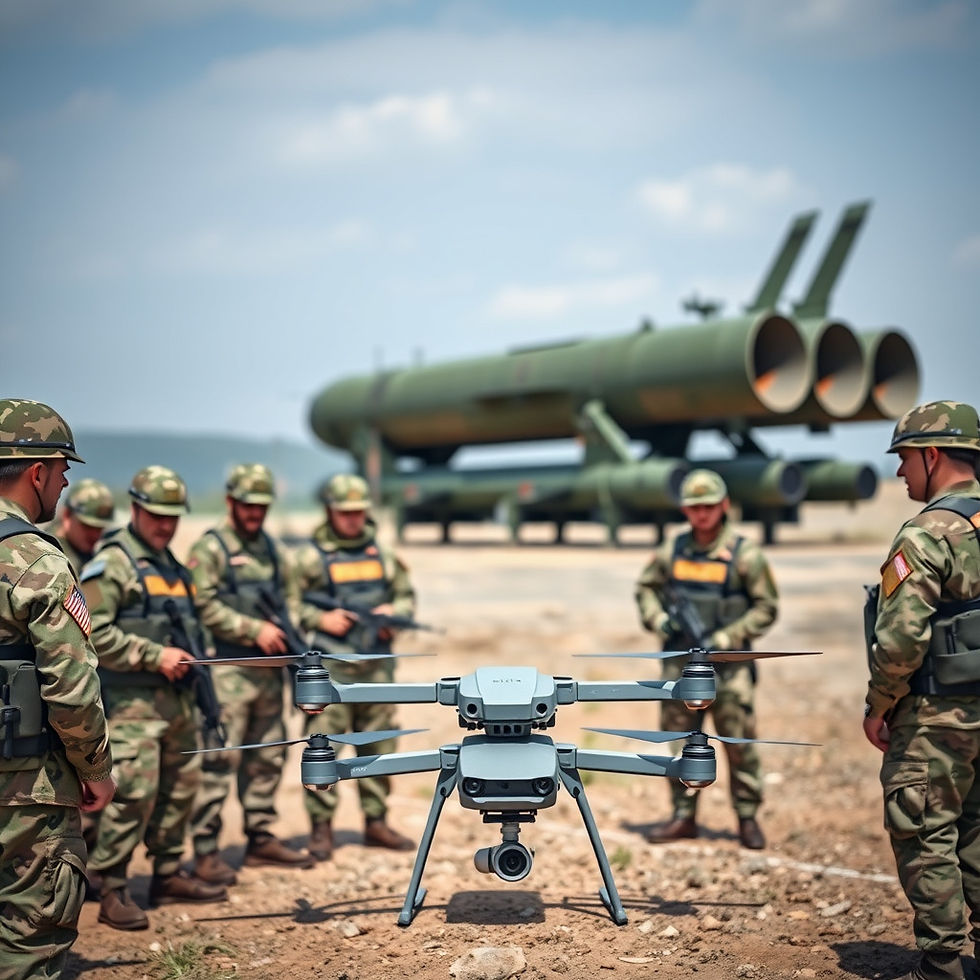
Cost asymmetry and battlefield efficiency: why cheap systems are winning
A defining feature of the new economics of warfare is cost asymmetry. This occurs when one side can impose much higher costs on its opponent using relatively inexpensive tools.
For example, first-person view drones costing between $300 and $500 can achieve effects that once required expensive artillery. At the same time, defending against these drones can be extremely costly. Using a multi-million-dollar missile to intercept a low-cost drone creates an unsustainable financial model.
This dynamic is reshaping how wars are fought. Instead of focusing on destroying enemy forces through direct confrontation, militaries are increasingly focused on exhausting their opponent’s resources.
Saturation tactics are a key part of this approach. By deploying large numbers of cheap systems, one side can overwhelm the defences of the other. Even if many of these systems are destroyed, the overall strategy can still succeed.
This has important implications for defence planning. It suggests that success is no longer determined by having the most advanced technology, but by having the most efficient cost structure.
Drone warfare and autonomous systems: redefining military capability
Drones are at the center of this transformation. Once considered niche tools, they are now essential components of modern military operations.
They offer several advantages. They can operate at a distance, reducing risk to personnel. They are relatively inexpensive, making them accessible to a wider range of actors. And they can be used for a variety of purposes, including surveillance, reconnaissance, and precision strikes.
The rapid growth in drone use has created a new ecosystem of manufacturers, software developers, and technology firms. This is driving innovation at a pace that traditional defence industries struggle to match.
Autonomous systems are also becoming more important. While many drones are still controlled by humans, advances in artificial intelligence are enabling greater levels of automation. This is likely to further increase their effectiveness and reduce costs.
As a result, defence investment is shifting toward these technologies. Governments are allocating more resources to drone programs, electronic warfare, and AI-driven systems.

Defence investment planning: reallocating budgets for modern warfare
The shift in technology is driving a major reallocation of defence spending. Governments are moving funds away from traditional platforms and toward new capabilities.
This includes cutting or reducing investment in legacy systems such as certain helicopters and ground vehicles. The savings are being redirected toward drones, autonomous systems, and digital infrastructure.
The scale of this shift is significant. Funding for drone and autonomous programs is increasing rapidly, reflecting their growing importance on the battlefield.
At the same time, investment is expanding beyond traditional combat systems. There is greater focus on areas such as:
Networked sensors and intelligence systems
Electronic warfare capabilities
Command-and-control platforms powered by AI
These investments support a more distributed and flexible approach to warfare, where information and coordination are as important as firepower.
Labor economics and force structure: fewer soldiers, more specialists
The new economics of warfare is also changing the role of people in the military.
In traditional models, large numbers of soldiers were required to operate equipment and engage directly in combat. Today, many of these roles are being replaced or supplemented by technology.
Drones now account for a large share of frontline activity. This reduces the need for direct human involvement and lowers the risk of casualties. As a result, militaries can preserve highly trained personnel while still achieving operational objectives.
This is leading to smaller, more specialized forces. Instead of large infantry units, there is greater demand for skilled operators, engineers, and data analysts.
Support functions are also evolving. Autonomous vehicles are being used for logistics and casualty evacuation, further reducing the need for human presence in high-risk areas.
For defence planners, this means rethinking recruitment, training, and workforce development.
The focus is shifting from quantity to quality.

Industrial resilience and innovation cycles: the new foundations of military power
Another key aspect of the new economics of warfare is the importance of industrial capacity.
In the past, military power was closely linked to the ability to produce large, complex systems.
Today, it is increasingly linked to the ability to produce large quantities of smaller, simpler systems quickly.
This requires a different kind of industrial base. Instead of relying on a small number of large contractors, there is greater emphasis on networks of smaller companies that can innovate rapidly.
Innovation cycles are also much shorter. New technologies are developed, tested, and deployed in weeks rather than years. This requires more flexible procurement processes and closer collaboration between the military and industry.
Industrial resilience is becoming a key strategic factor. Countries that can scale production quickly and adapt to changing needs will have a significant advantage.
Multi-domain warfare and system integration: connecting air, land, sea, and space
Modern warfare is no longer confined to a single domain. Operations now span air, land, sea, cyber, and space, and success depends on the ability to integrate across these areas.
Unmanned systems are playing a central role in this integration. Drones can operate in multiple domains, providing a common platform for surveillance, communication, and attack.
For example, low-cost naval drones are now capable of challenging high-value warships. This demonstrates how traditional advantages can be undermined by new technologies.
Space is also becoming critical. Satellite systems provide communication, navigation, and intelligence, creating what some describe as an “internet of the battlefield.”
For defence investment planning, this means prioritizing systems that can operate across domains and share information effectively.
Strategic implications for governments: how defence investment must adapt
The new economics of warfare requires a different approach to defence planning.
First, governments need to adopt a more flexible investment strategy. This includes balancing traditional capabilities with new technologies.
Second, procurement processes must be faster and more adaptable. Long development cycles are no longer suitable for a rapidly changing environment.
Third, there is a need to support innovation ecosystems. This includes investing in startups, research institutions, and technology partnerships.
Finally, defence planning must consider sustainability. This includes not only financial sustainability but also the ability to maintain operations over time.

What if the shift in warfare economics is overstated?
While the trends described are significant, it is important to consider an alternative view.
What if the impact of drones and low-cost systems is being overstated?
There are several reasons why this might be the case. High-end platforms still play a critical role in many scenarios, particularly in large-scale conflicts between major powers. Air superiority, naval and advanced missile systems remain essential.
There are also limitations to low-cost systems. They can be vulnerable to electronic warfare and may not perform well in all environments. In addition, reliance on technology creates new risks, including cyber threats and system failures.
It is also possible that the cost advantage of cheap systems will decrease over time as countermeasures improve.
In this scenario, the future of warfare may involve a balance between traditional and new approaches, rather than a complete shift.
Planning defence investment in the new economics of warfare
The new economics of warfare represents a fundamental change in how military power is created and sustained.
Low-cost, scalable technologies are reshaping the battlefield. They are changing the balance between offense and defence, altering force structures, and driving new patterns of investment.
For governments, the challenge is to adapt. This means rethinking budgets, embracing innovation, and building more flexible and resilient defence systems.
At the same time, it is important to maintain a balanced approach. Traditional capabilities still matter, and the future is likely to involve a combination of old and new.
Key recommendations include increasing investment in drones and autonomous systems, improving procurement speed, strengthening industrial resilience, and developing a highly skilled workforce.
By taking these steps, governments can position themselves to succeed in a rapidly changing security environment.
For more insights on strategy, investment, and global trends, consider subscribing to updates at www.Georgejamesconsulting.com.


Comments